Visiting Brother Jack
Visiting Jack
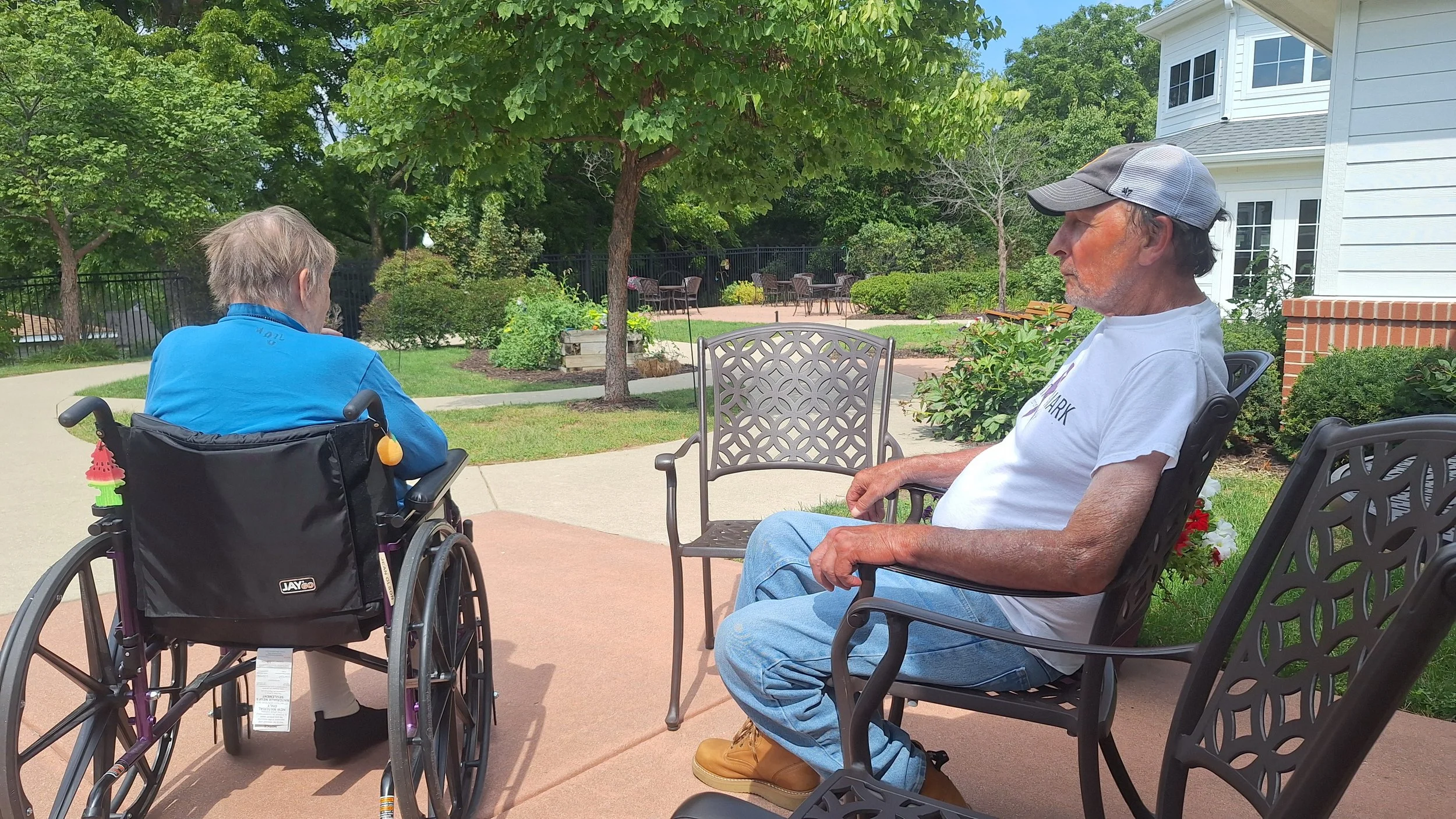
“Hi, Jack. You look great. You have new boots!” Already I’ve said too much. But my excitement and trepidation when visiting my older brother gets me revved up. Seeing his confusion, I add in a calmer voice, “Your sister Jane is visiting.” I want to hug him, but I don’t.
Monthly visits are inadequate, and I wish Jack could move closer so I could pop in daily. He changes so much from month to month. Phone calls are no longer an option.
Last month was the first time Jack seemed to smile in recognition when I walked in. He said, “I had surgery.” Shocked, I asked for details. Again, not a good approach. Questions are hard for someone in the depths of dementia, living in the cocoon of a memory care facility. I slowed down and tried again. “I’m sorry you weren’t well. What hurt?”
“Everything came out, and they put it back in.” Later his son James explained that Jack had a hernia that became infected and erupted.
On that visit, he was more tired than usual, had bags under his eyes, and was even thinner than this month. Afterwards, when I asked the staff about his thinness, they assured me that Jack’s a good eater and doesn’t like sweets. Jack’s always been health-conscious and stayed away from bread and sweets before it became fashionable.
By high school, Jack was well established as a jock; he lifted weights in the basement, ran up and down the stairs, jumped rope, and ate healthily. But I suspect that’s also when he started drinking.
During our visits, Jack gets upset at his imaginary memories, saying I did nothing when Dad put him in that big house on the hill. There, he claims, he lived by himself and Dad would come once a week to throw him a bag of McDonald’s. (He actually lived at home and was well fed until he moved out.) Other stories include variations on the big house, what a jerk I was and still am (when we were kids he was always beating me up!), his wife not driving (he was divorced a while ago), our mom being a whore (she wasn’t), and Jill and I not being his sisters. But he’s only mentioned Jill that once. He doesn’t want to hear her name and doesn’t want the pictures I bring of her and him. He says, “She didn’t deserve what happened to her.”
Jill died from Alzheimer complications. About four years later, Jack was admitted on a Chapter 51 involuntary commitment, diagnosed with dementia and court-ordered to have 24-hour care. He has two brain aneurysms, and we assume the dementia may be related to a lifetime of heavy drinking. Our dad died young from alcohol poisoning and a brain aneurysm. Both have a genetic component.
My big challenge is navigating dementia with a brother I once adored (my mom once told me I used to live in fear of him dying) but later feared.
When I first learned of his arrest, hospitalization, and diagnosis, I replayed all the bad memories. Like playing a tape in reverse, I went back as far as I could remember. We’ll never know when the disease began; it was the same with my sister when she became sick. But I remember my fear during those first visits, wondering if he might hurt me. He didn’t. He hasn’t. And he seems to be a favorite of the staff, as these days he is quiet and quick to help.
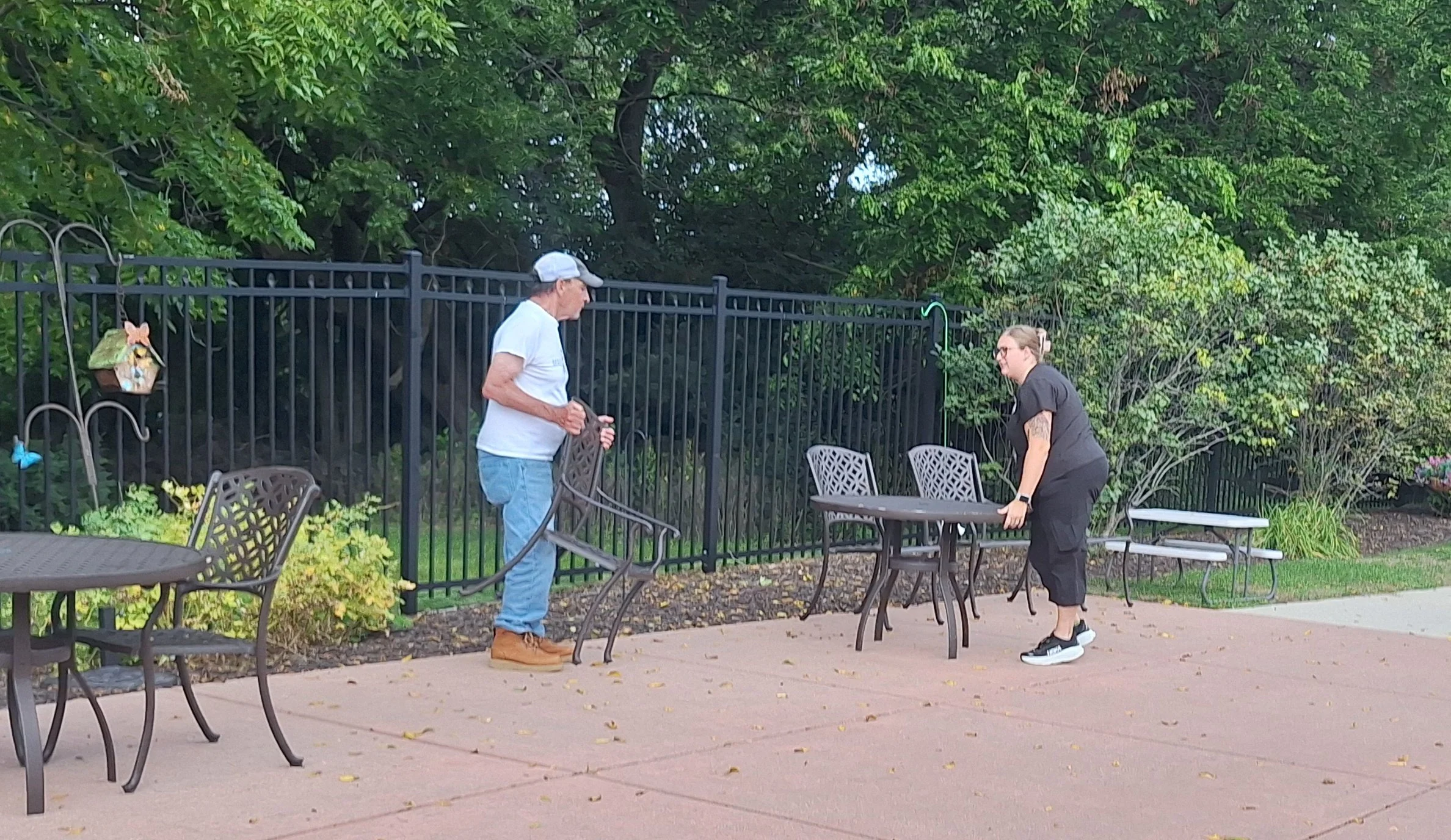
Recently, as we walked in the gated yard, we saw a staff person rearranging chairs. Jack told me to “stay” and walked over to her. Again I jumped in too quickly, offering, “I think my brother may want to help you.” After moving a few more chairs, she answered, “Yes, Jack likes to help.” Then she pointed to a chair and also to where it should go. Fifty lifetimes passed before he picked the chair up and shuffled it closer to where she pointed.
They say dementia is harder on the family than it is on the person with the diagnosis. But it’s painful when they first suspect they are losing their precious brain. I saw that with my sister Jill. She knew. I didn’t witness it with Jack, but in hindsight, warning signs were there. “Who are you?” he’d ask when I called, and I’d laugh as if he were joking and say, “Your sister.” And he never called me when my granddaughter Helena died. Still, I couldn’t be sure—were those signs of dementia, or the start of it? Or the effects of a lifetime of too much alcohol?
Jill didn’t deserve Alzheimer's, nor Jack his dementia. No one does.
The staff is gathering folks to come to dinner. I resist my urge to take Jack’s hand and lead him to the table. He moves slowly to the dining area and stands there looking lost. A staff person points to where he should sit. I don’t help him. I don’t hug him. And I don’t say goodbye. Our visit is over.
When I get down the hallway and look back, he’s sitting in his seat, unaware that I’ve been there.