The Same, Yet Different
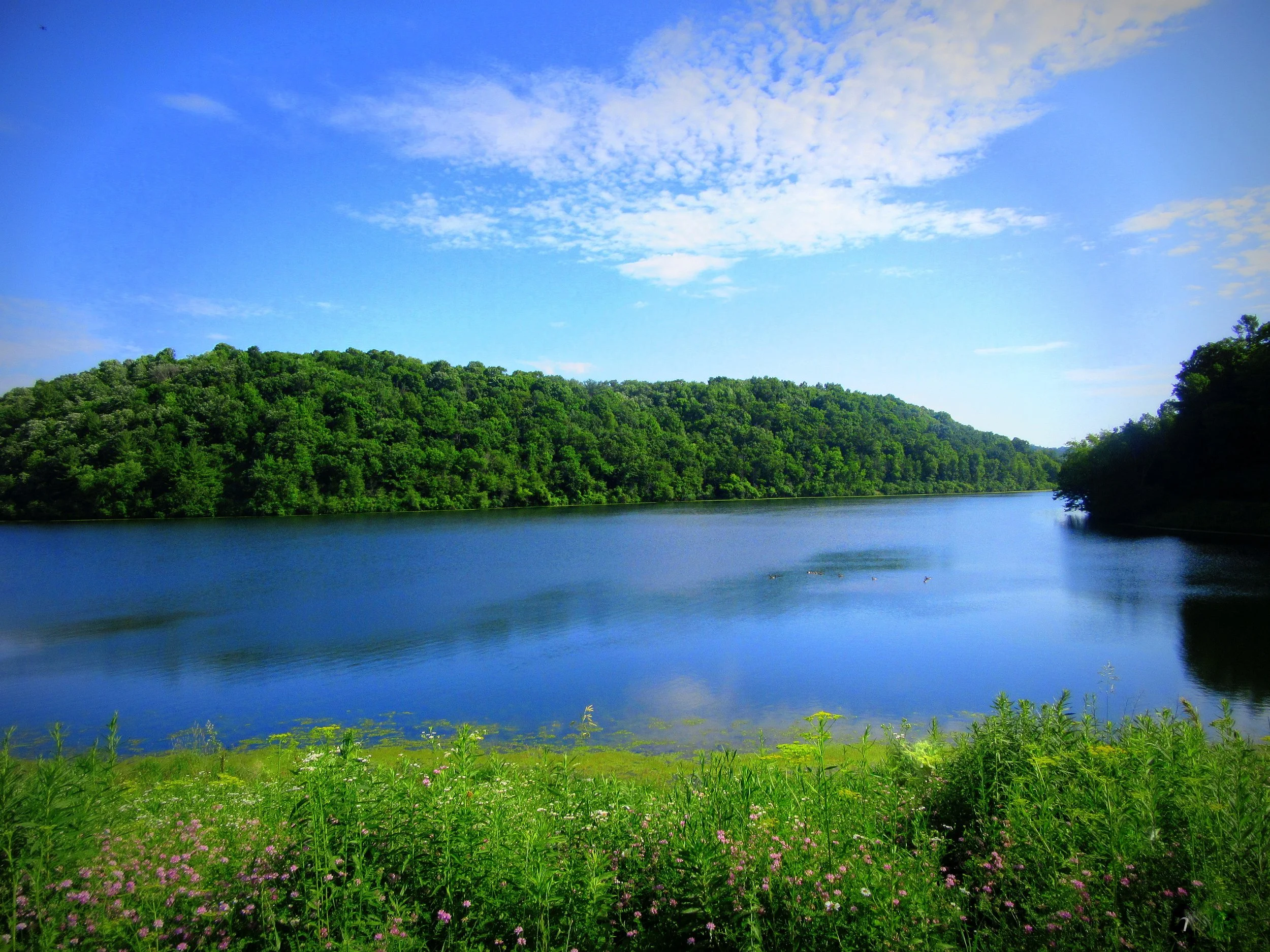
Sidie Hollow
The Same, Yet Different
“Hello, bullfrog!” I sing out, just as Dane stops and points, whispering, “Shhh, there’s a blue heron.”
We debate whether it’s the same one we see year to year, week to week, here at Sidie Hollow Park. We watch as she spears three fish with her sharp bill, then shakes them down her gullet. We feel lucky to see nature this closely. “It’s better than a National Geographic magazine,” I say.
A few years ago, if it was the same heron, she flew up to a tree after we spooked her by coming around the trail. I was able to zoom in and get perfect pictures of this tallest North American heron. A great blue heron can stand up to four feet tall and have a wingspan of six and a half feet. Later I learned they weigh only about five to six pounds! They remind me of little dinosaurs.
Oh no, the red-winged blackbirds are attacking her! Dane laughs at their futile attacks, but I’m worried about her. The same thing happened to me years ago, when my three-legged dog, Moses, was still alive. I was enjoying a morning walk, and there must have been a nest nearby. I kept saying, “I’m not going to hurt you,” and the protective bird was shrieking, “Don’t even think about it!” I never felt its beak, but I did feel the frightening brush of wind from its wings.
Finally, having had enough of the four blackbirds bombarding her, the heron flies away. Soon after, Dane points again, and I see a much smaller green heron, also out fishing.
It’s early Saturday morning, and we’re trying to get the dogs walked before the day gets too hot. I think of the popular Heraclitus quote, “No man steps in the same river twice, for it’s not the same river and he’s not the same man.” No matter how many times we’ve been on the two-mile trail around Sidie Hollow, it’s different every time.
Today, soon after getting out of the car and entering the grassy camp area, Dane spied the nest where we had seen a snapping turtle leave her eggs a week ago. Sadly, the nest has been dug up, and the eggs sucked out, leaving the shell. My guess is a raccoon did it, while Dane thinks it was a skunk, but it could easily have been a fox, coyote, or opossum too. My friend saw a bobcat at Sidie not long ago; I wonder if a bobcat would eat turtle eggs.
Before moving on, we watch two sets of ducklings swimming with their parents. They seem to be buoyed up by the bright green algae. It looks slimy to me, but they look happy and are certainly finding plenty of insects to eat.
As we continue up the hillside in the shade, the dogs lead and sniff every tree. They know this route and enjoy it as much as we do.
When we get to the dam area, we notice three flocks of adult Canada geese arranged in a bowling pin pattern, about a foot apart. This time we spot a set of goslings and admire them as they glide through the water.
There are three boats on the lake, all busy with folks fishing, and a group of kids on each pier. It does our hearts good to see this much activity so early; it’s never crowded at this time of day. As usual, on the trail, we’ve only passed one lady with a dog and two teens so far.
As we approach the picnic shelter and kids' play area, we count three more groups of ducklings. Dane points out that some of the little ones are quite far from their parents.
I’m looking for my favorite reptiles, the turtles. I’m disappointed not to see them sunning on the logs like we normally do. But as we watch the ducklings, I shout, “There they are; they look like alien monsters!” The turtles are covered in algae from head to tail, camouflaged on logs floating in the murky waters.
Once we get past the swings and the pavilion, the dogs start pulling Dane toward their drinking spot. They love to cool off in the water and get a drink before finishing the well-worn loop.
We stop to admire some brilliant pink sweet pea flowers before we get in the car. On the way home, the dogs immediately zonk out. Dane and I reflect on the walk, the clouds, and how pretty the plumeless purple thistle is, even though we know it’s invasive.
Once home, I learn that bobcats will indeed dig up turtle eggs and eat them. Next time, I hope we see one—but not eating the turtle eggs!
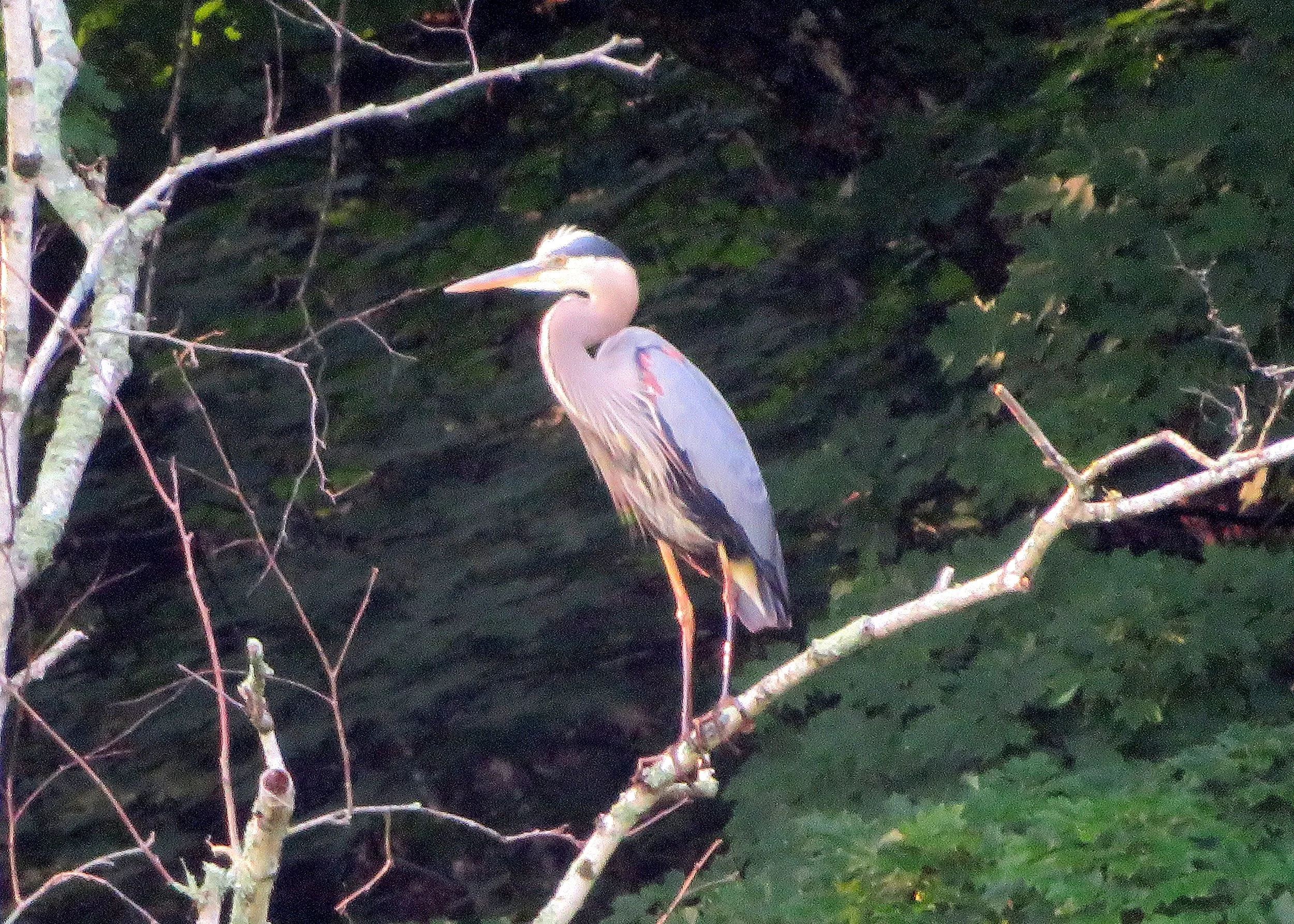
Blue Heron
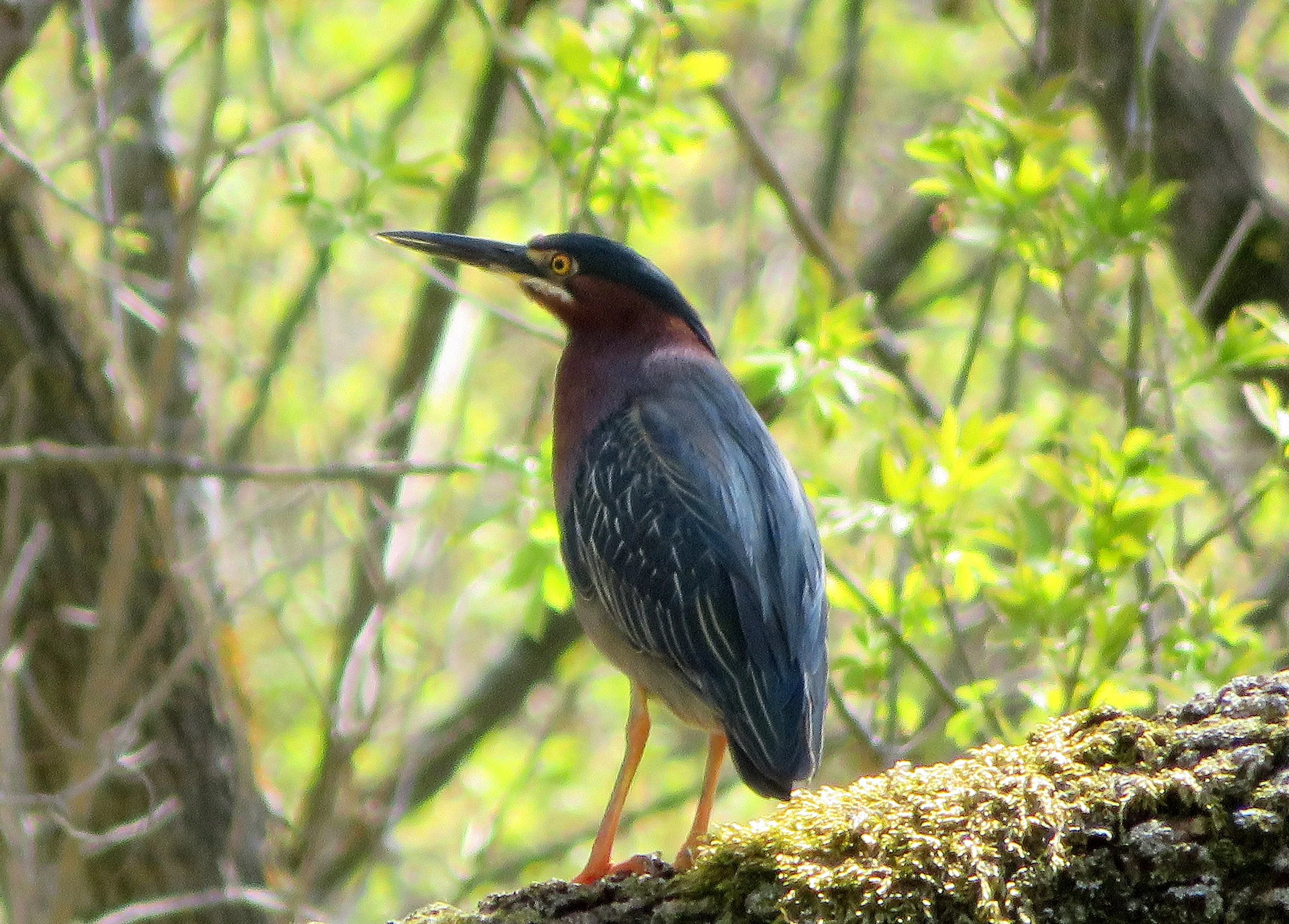
Green Heron