Telephone of the Winds
Telephones of the Wind
“Hi, Helena, it’s Grandma Riley. I miss you. We all do. We think about you all the time and wonder how you’re doing…”
In 2011, garden designer Itaru Sasaki moved the private white telephone booth from his personal garden to a hill overlooking the Pacific Ocean in the town of Otsuchi, Japan. He had built his phone booth in 2010 to help him cope with the death of his cousin. But after the devastating Tōhoku tsunami hit northeast Japan, killing over 15,000 people, Sasaki wanted the public to have access to the same healing and remembrance the booth had provided him.
I learned about his and other “wind phones” in 2021 when I read the novel The Phone Booth at the Edge of the World, by Laura Imai Messina, inspired by Sasaki’s story.
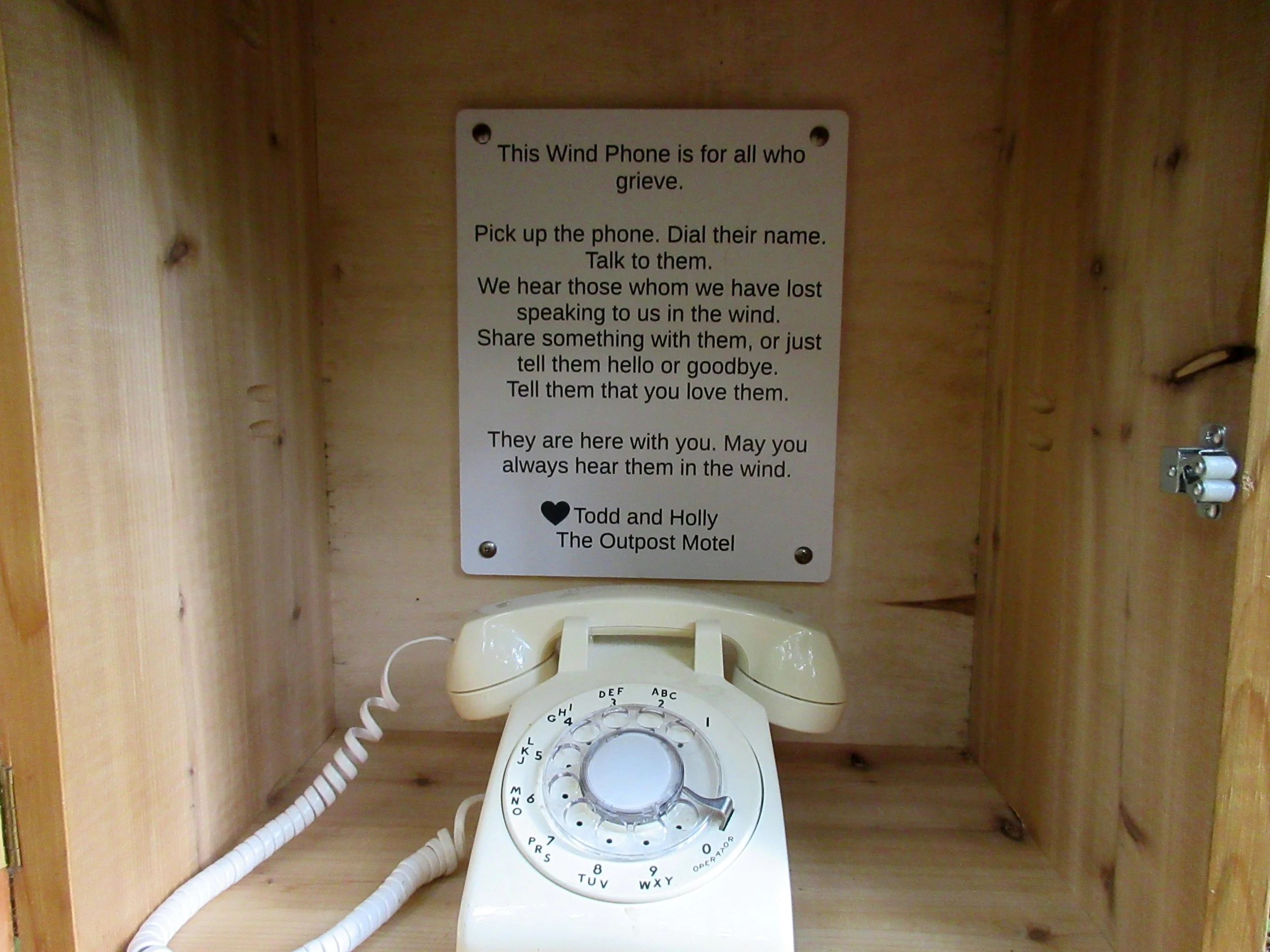
The idea struck me as simple yet beautiful. I could see how it could comfort grieving folks to pick up a disconnected rotary phone, dial their beloved’s name, talk to them, and let the wind carry their heartfelt messages.
Later that year, CBS Sunday Morning aired a segment with correspondent Lee Cowan, called “Telephones of the Wind,” which furthered my curiosity. The show highlighted a wind phone set up in a Washington state park that let grieving people talk to lost loved ones. At that point, it had never occurred to me that I could hold a phone and talk to someone I’d lost and missed. My method had always been writing and taking long walks in nature.
People now travel from all over the world to sit quietly in Sasaki’s booth and talk to their deceased loved ones. His phone and the experience of folks who’ve used it have inspired the creation of wind phones worldwide, giving grieving folks a sense of connection.
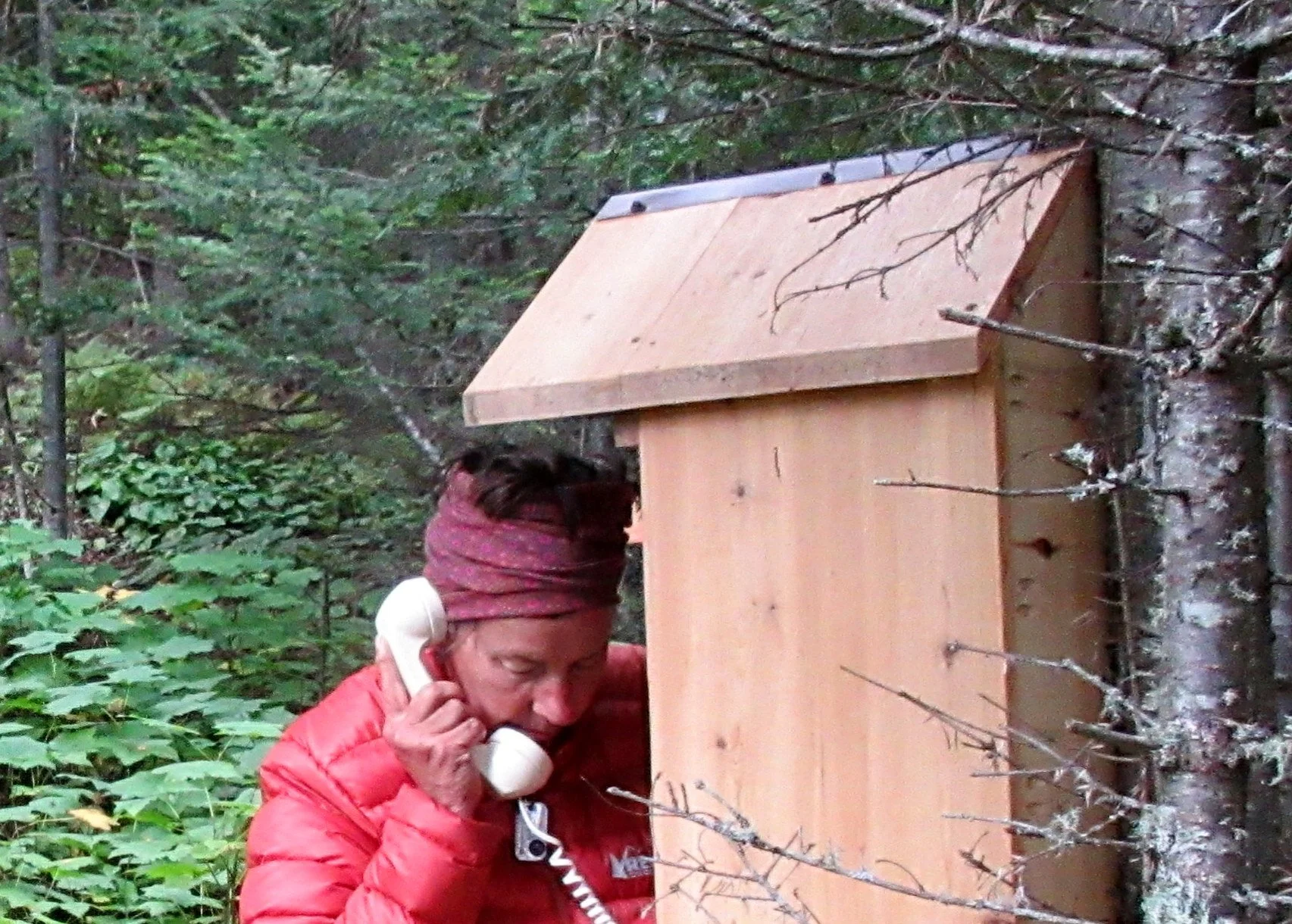
Today, the My Wind Phone website (mywindphone.com) lists 462 phones in the United States. I was thrilled to discover wind phones in La Crosse and Madison, but even more excited to find one at the Outpost Motel (outside Grand Marais on Highway 61), where Dane and I stayed before and after our recent Isle Royale trip.
Dane walked with me under the prayer flags on a mowed pathway lined with trees of all sizes. My eyes were drawn to the white of the birch trees as we walked hand in hand up the path. The motel sits across the street from a pebbled shoreline of Lake Superior, and the sound of her waves carried on this chilly, overcast day as Dane returned to our room to give me privacy.
When I picked up the phone and dialed my granddaughter Helena’s name, I knew my voice would carry like the waves. I felt she’d hear my every word, and tears poured down my face as I started talking.
Later I chuckled, remembering how I’d worried at first that I wouldn’t know what to say. But in truth, I couldn’t stop talking. I told her about her mom and dad and their new dog, Chester, and how Winston, their lovable Saint Bernard, had to be put to sleep—then added that I assumed she already knew that and maybe was with him right now. I told her about Peens, one of her cats, and how he liked to rub on me when I slept there. I told her about her mom’s grief and her upcoming 50th birthday. Frequently I stopped myself and said, “I’m sorry; I’m sure you know all of this.”
Finally, feeling drained, I said good-bye and assured her I’ll call again.
I’ve figured out the perfect place to add a wind phone here on my property, where folks can safely pull off the road and, in privacy, call their beloved’s name and talk. I have a rotary phone and only need to have a shelter built to hold it.