Growing Old Is Not for Sissies
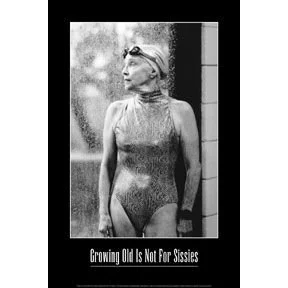
Growing Old Is Not for Sissies
Posters that hung on the wall of a gym when I was in my thirties featured a healthy, mature man or woman and the words “Growing old is not for sissies.” I was impressed with their physique, but also curious about their brain health.
Most of the older folks I knew complained about forgetting names, their wallets, and what they’d done the day before. Later, when I started working with folks older than me by about twenty years, one of them jumped up in class, exclaimed, “I think I forgot to turn off the stove,” and rushed out the door.
It reminded me of the time my mom accidentally left me at Kohl’s grocery store. I had headed off to look at the magazines while she shopped. After a while, I started looking for her, then for the car, which was gone. When she eventually pulled up in the green station wagon, I got in the back seat and slammed the door. How could she forget her kid?!
Some people mistakenly sign up twice for my online fitness classes. When I tell them to watch for a refund, they get embarrassed. I remind them of how much they do remember! But when longtime class members start forgetting what day their class is or what time it is, it makes me think of Dr. Marian Diamond.
She was an American neuroscientist who discovered the brain’s plasticity—that our brains can change with experience and improve with enrichment. It’s been said that it’s not the years in your life that count—it’s the life in your years. And a healthy brain helps us put more life in our years.
Dr. Diamond, who died in 2017 at age 90, outlined five factors that contribute to a healthy brain at any age: exercise, diet, newness, challenge, and love.
Exercise
Dr. Alex Lief of Harvard Medical School said exercise is “the closest thing we have to an anti-aging pill.” The best types of exercise for older adults include a mix of strength training, aerobics, balance, and flexibility. We need to maintain muscle, bone, and heart health while preventing falls. Consistency is crucial in an all-around exercise program.
Diet
Plenty of research shows that adding more fruits and vegetables to our daily diet can protect against certain cancers, lower blood pressure, keep our eyes healthy as we age, ease IBS symptoms, help prevent diverticulitis, and reduce the risk of heart disease and stroke.
Not surprisingly, Dane’s cardiologist recommended eating more fruits and vegetables daily, as did my nephrologist. Both also talked about the importance of water—for each of us, 64 ounces daily.
However, Dr. Diamond gets more specific about foods for the brain: omega-rich foods like nuts, seeds, avocados, and fish, as well as complex carbohydrates, such as brown rice and oats, which provide steady energy for the nervous system and for brain metabolism. Her favorite protein was eggs, and especially the yolk, which is rich in choline, a nutrient important for neurotransmitter production in the brain.
Beans and legumes, another great source of protein, also provide folate and B vitamins. And all of those fruits and vegetables contain antioxidants that protect our brain cells from stress and free radical damage. Dr. Diamond was also a strong advocate for avoiding sugar and processed foods, which she claimed (and we now know) can cause inflammation and negatively impact cognitive function.
Newness and Challenge
In her research, Dr. Diamond found that even older rats showed heightened brain activity when their living area was enriched. For humans, learning a new language, taking dance classes, and joining a book club are all ways to challenge the brain and support overall brain health as we age. Calling a friend to explore a new hiking trail, ice skating, or even going sledding will help the brain’s development, keeping it active, efficient, and continually forming new connections, according to the doctor.
Love
Dr. Diamond’s fifth component, love, seemed controversial at first, but she supported it with scientific insight and an understanding of well-being. She noticed that even simple, tender care significantly affected the rats' brain development and longevity in her studies.
As Arthur Pinero, an English playwright, said, “Those who love deeply never grow old; they may die of old age, but they die young.”
Dr. Diamond would say that being loving keeps our brains healthy, as do the foods we choose, the exercises we partake in, and our curiosity to keep learning and engaging. In some ways, she was ahead of her time, but most of her findings when it comes to aging we’ve sensed all along, and if we’re wise, we’ll adhere to them. After all, we’re not sissies!

Postor images that were at the gyms